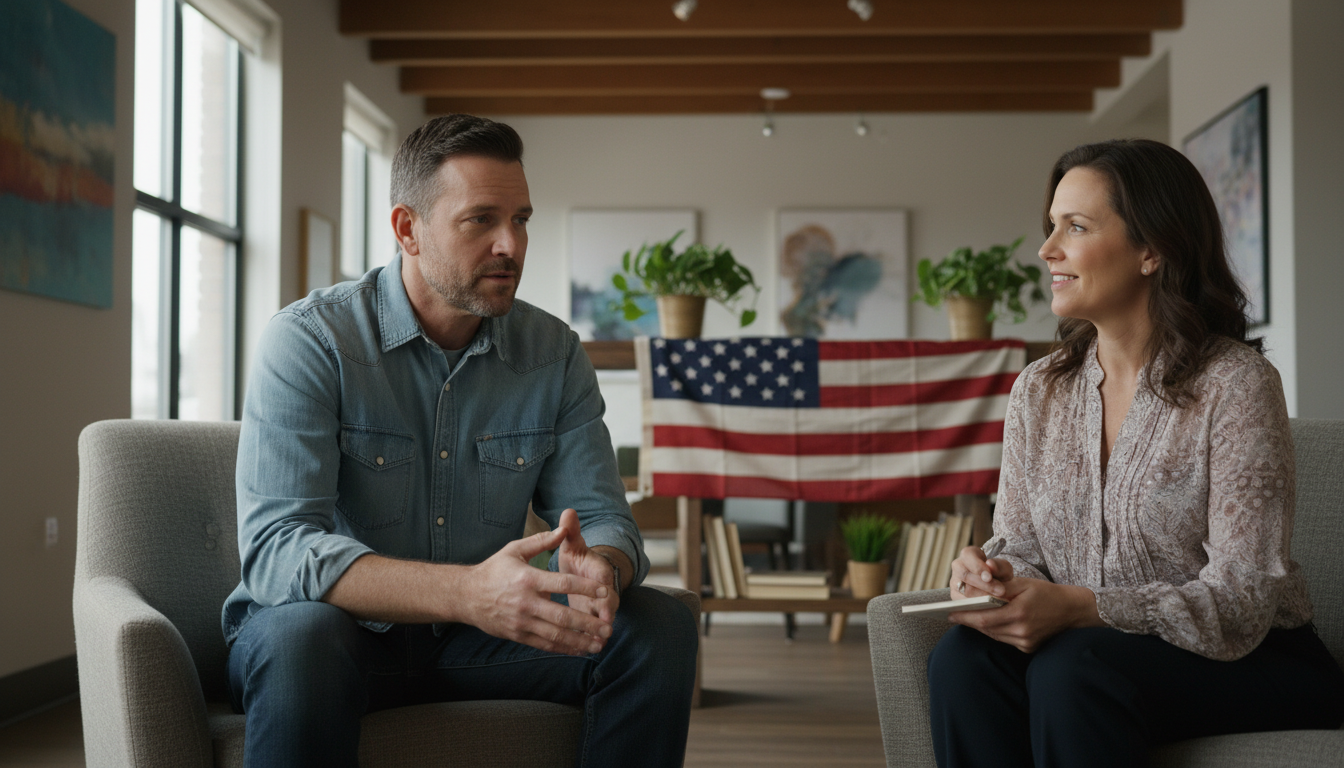
Finding a Therapist for Veterans in Carlsbad
Military service demands extraordinary sacrifice, and the mental health effects of that service often persist long after a veteran returns to civilian life. If you or a loved one is searching for a Carlsbad therapist for veterans, this guide covers the unique challenges veterans face, the evidence-based therapies that work, and how to find the right provider near Camp Pendleton and greater North County San Diego.
The Unique Mental Health Challenges Veterans Face
Veterans carry experiences that most civilians will never encounter. Repeated deployments, combat exposure, military sexual trauma, the sudden loss of unit members, and the jarring transition from a highly structured military environment to unstructured civilian life create a combination of stressors that is unlike anything found in the general population.
According to the U.S. Department of Veterans Affairs, roughly 7% of veterans will experience PTSD at some point in their lives, compared to about 6% of the general population. But the numbers only tell part of the story. Veterans also experience elevated rates of depression, substance use disorders, chronic pain, traumatic brain injury, and suicidal ideation. Many of these conditions overlap, making accurate diagnosis and effective treatment more complex.
Carlsbad's proximity to Marine Corps Base Camp Pendleton means our community includes a large population of active-duty service members, recently separated veterans, and military families. Access to therapists who genuinely understand military culture is not a luxury here; it is a practical necessity. A Carlsbad therapist for veterans should be equipped to address the full spectrum of service-related mental health conditions, including those that do not become apparent until months or years after discharge.
Key fact: Veterans are 1.5 times more likely to die by suicide than non-veteran adults. Early intervention with a qualified therapist can be life-saving. If you or someone you know is in crisis, call the Veterans Crisis Line at 988, then press 1.
PTSD and Trauma-Informed Therapy for Veterans
Post-traumatic stress disorder is the condition most commonly associated with military service, and for good reason. Combat exposure, improvised explosive device blasts, witnessing casualties, and operating under constant threat create deep neurological imprints that alter how the brain processes fear, memory, and emotional regulation.
Trauma-informed therapy differs from general talk therapy in a fundamental way: it recognizes that the symptoms a veteran experiences, including hypervigilance, emotional numbness, nightmares, irritability, and avoidance, are not character flaws but predictable neurological responses to extreme stress. A trauma-informed Carlsbad therapist for veterans will build treatment around this understanding rather than simply asking a client to "talk about their feelings."
Effective trauma and PTSD treatment typically involves structured protocols that have been validated in randomized controlled trials specifically with veteran populations. The VA itself endorses several of these approaches, and civilian providers in Carlsbad can deliver the same evidence-based care, often with shorter wait times and greater scheduling flexibility.
It is also important to understand that PTSD frequently co-occurs with other conditions. A veteran dealing with PTSD may simultaneously struggle with alcohol dependence, chronic insomnia, or major depressive disorder. This is where a dual diagnosis treatment approach becomes essential, addressing multiple conditions in a coordinated, integrated plan rather than treating each one in isolation.
Types of Therapy That Help Veterans: CPT, PE, and EMDR
Not all therapy is created equal when it comes to treating service-related trauma. Three modalities have the strongest evidence base for veterans with PTSD and are recommended as first-line treatments by the VA and the American Psychological Association.
Cognitive Processing Therapy (CPT)
CPT is a 12-session protocol that helps veterans identify and challenge distorted beliefs that developed as a result of trauma. For example, a veteran who survived an ambush may carry the belief "I should have done more to save my team," leading to chronic guilt and depression. CPT provides structured worksheets and guided discussions that help the veteran evaluate these beliefs against evidence and develop more balanced ways of thinking. Research consistently shows that CPT reduces PTSD symptom severity by 40-50% in veteran populations.
Prolonged Exposure Therapy (PE)
PE works on the principle that avoidance maintains PTSD symptoms. Under the guidance of a trained therapist, the veteran gradually and safely confronts trauma-related memories and situations they have been avoiding. Sessions typically include imaginal exposure, where the veteran recounts the traumatic event in detail, and in vivo exposure, where they engage with real-world situations that trigger anxiety. PE usually spans 8 to 15 sessions and has demonstrated strong efficacy in multiple VA clinical trials.
Eye Movement Desensitization and Reprocessing (EMDR)
EMDR uses bilateral stimulation, most commonly guided eye movements, to help the brain reprocess traumatic memories so they are stored in a less distressing way. Unlike CPT and PE, EMDR does not require the veteran to provide detailed verbal accounts of the trauma, which makes it a preferred option for veterans who find it difficult to narrate their experiences. A typical course of EMDR for a single-incident trauma runs 6 to 12 sessions, though complex or multiple traumas may require more.
| Therapy Type | How It Works | Typical Duration | Best For |
|---|---|---|---|
| CPT | Challenges distorted trauma-related beliefs through structured cognitive work | 12 sessions | Veterans with guilt, shame, or distorted beliefs about the trauma |
| PE | Gradual, safe confrontation of avoided trauma memories and triggers | 8-15 sessions | Veterans with strong avoidance patterns and anxiety-driven PTSD |
| EMDR | Bilateral stimulation to reprocess traumatic memories | 6-12 sessions | Veterans who struggle to verbalize trauma or prefer less talk-based therapy |
| Group Therapy | Peer-supported sessions addressing shared military experiences | Ongoing (weekly) | Veterans who benefit from camaraderie and shared understanding |
| Medication Management | SSRIs or SNRIs prescribed alongside therapy to manage symptoms | Varies | Veterans with severe symptoms that impede engagement in therapy |
VA Benefits and How to Access Civilian Therapy in Carlsbad
Many veterans assume that VA medical centers are their only option for mental health treatment. While the VA provides excellent care, there are several pathways for veterans to receive therapy from civilian providers in Carlsbad, often with the VA covering part or all of the cost.
VA Community Care (VCCP)
The VA Community Care Program allows eligible veterans to receive treatment from approved civilian providers when the VA cannot provide care within designated wait-time or drive-time standards. If the nearest VA facility offering specialized PTSD treatment has a wait time exceeding 20 days or is more than 30 minutes away, you may qualify for community care referral to a local Carlsbad therapist.
TRICARE for Transitioning Service Members
Recently separated veterans may still have TRICARE coverage for a transitional period. TRICARE covers outpatient mental health services, including individual therapy, group therapy, and psychiatric medication management. Many civilian therapists in the Carlsbad area accept TRICARE.
Private Insurance and Self-Pay
Veterans who have transitioned to employer-sponsored insurance or marketplace plans can use those benefits to see any in-network therapist. Choosing a civilian provider often means shorter wait times, more appointment flexibility, and the ability to select a therapist who specializes in veteran mental health. At Carlsbad Behavioral Health Solutions, our admissions team can help you verify your insurance coverage within minutes so you know exactly what your benefits include before you begin treatment.
Tip: If you are unsure whether you qualify for VA-covered civilian therapy, call the VA Health Benefits Hotline at 1-877-222-8387 or speak with a Patient Advocate at your local VA Medical Center. You can also contact us at (760) 400-6412 and our team will help you explore every available option.
What to Look for in a Veteran-Friendly Therapist in Carlsbad
Finding a therapist with the right credentials is important, but for veterans, cultural competence matters just as much as clinical skill. Here are the qualities that distinguish a truly veteran-friendly therapist from one who simply lists "PTSD" on their website.
- Military cultural competence. The therapist should understand rank structure, deployment cycles, the difference between combat arms and support roles, and the specific stressors associated with each branch of service. Veterans can tell within minutes whether a provider "gets it."
- Training in VA-recommended modalities. Look for providers specifically trained in CPT, PE, or EMDR. Board certification in clinical psychology or psychiatry with additional trauma-focused training is an excellent indicator of competence.
- Experience with co-occurring conditions. Many veterans deal with PTSD alongside substance use, chronic pain, or anxiety disorders. A qualified therapist should be comfortable addressing multiple conditions simultaneously.
- A confidential, judgment-free environment. Many veterans worry that seeking mental health treatment will be perceived as weakness. The right therapist will create a space where asking for help is recognized as an act of strength.
- Flexible treatment levels. Not every veteran needs the same intensity of care. A provider that offers a continuum, from residential treatment for severe cases to outpatient therapy for ongoing maintenance, ensures you receive exactly the level of support you need.
How Carlsbad Behavioral Health Solutions Supports Veterans
At Carlsbad Behavioral Health Solutions, we have built our clinical programs with the understanding that veterans require specialized, culturally informed care. Our CARF-accredited facility offers a full continuum of treatment, from residential and partial hospitalization to intensive outpatient and outpatient therapy, so we can match each veteran with the appropriate level of care.
Our clinical team includes licensed therapists trained in CPT, PE, and EMDR who have direct experience working with veteran populations. We integrate individual therapy with group sessions, psychiatric medication management, mindfulness-based stress reduction, and family therapy because we know that healing does not happen in isolation. For veterans dealing with co-occurring substance use and mental health conditions, our dual diagnosis program provides the integrated care that research shows leads to significantly better outcomes.
Located just minutes from Camp Pendleton, our Carlsbad facility is designed to feel welcoming and safe, not clinical or institutional. We accept most major insurance plans, TRICARE, and can assist with VA Community Care referrals. If you are a veteran and you are not sure where to start, a confidential phone call to our admissions team is the simplest first step.
Support Beyond Individual Therapy: Building a Recovery Network
Individual therapy is the cornerstone of veteran mental health treatment, but lasting recovery often depends on the support systems that surround it. In Carlsbad and greater San Diego County, veterans have access to a range of complementary resources that reinforce therapeutic progress.
Veteran peer support groups provide connection with others who have shared the military experience. Unlike clinical therapy, peer groups are facilitated by fellow veterans and focus on mutual support, accountability, and community. Organizations like the Veterans of Foreign Wars (VFW) Post in Carlsbad and Team Red White & Blue host regular meetups that combat the isolation many veterans feel after leaving service.
Family and couples therapy addresses the relationship strain that military service often creates. Deployments, reintegration challenges, and the behavioral changes associated with PTSD can take a significant toll on marriages and family dynamics. Including family members in the treatment process helps everyone understand what the veteran is going through and equips the family with tools to support recovery.
Holistic and recreational therapies such as equine therapy, surf therapy, yoga, and art therapy have shown promising results as adjuncts to evidence-based treatment. Carlsbad's coastal setting makes it an ideal location for incorporating outdoor and nature-based therapeutic activities that reduce cortisol levels and improve overall well-being.
Career and transition support addresses one of the most overlooked contributors to veteran mental health struggles: the loss of identity and purpose that comes with leaving the military. Connecting veterans with vocational counseling, education benefits advisors, and local employers who value military experience can have a profoundly positive effect on self-esteem and long-term mental health.
Take the First Step Today
If you are a veteran in Carlsbad looking for a therapist who understands your experiences and can provide evidence-based treatment, Carlsbad Behavioral Health Solutions is here for you. Our admissions coordinators are available 24/7 to answer your questions, verify your insurance or VA benefits, and schedule a confidential assessment.